The History of MLS: From a World Cup Promise to Contraction to 30 Teams
MLS nearly folded in 2002. Here's how a league born from a World Cup promise survived contraction and grew into one of the biggest in the world.
- MLS exists because U.S. Soccer promised FIFA a top-flight league in 1988, in exchange for hosting the 1994 World Cup.
- The league kicked off in 1996 with 10 teams, shootouts to settle ties and a clock that counted down.
- After losing an estimated $250 million in five years, MLS folded both Florida clubs in January 2002 and shrank back to 10 teams.
- Soccer-specific stadiums, the 2007 Designated Player rule and steady expansion rebuilt the league to 30 teams by 2025.
- MLS switches to a summer-to-spring calendar in 2027-28, the biggest format change since its launch.
A League Built on a World Cup Promise
The United States had gone without a top-flight league since the North American Soccer League collapsed after the 1984 season. In 1988 FIFA awarded the country the 1994 World Cup, on one condition: U.S. Soccer had to create a Division 1 professional league. In 1993 the federation picked Major League Professional Soccer, the group that became MLS, for the job, and Major League Soccer was formally set up in February 1995.
The plan was to start in 1995 with 12 teams. That slipped to 1996 and 10 teams, split into two conferences:
| Eastern Conference | Western Conference |
|---|---|
| Columbus Crew | Colorado Rapids |
| D.C. United | Dallas Burn |
| New England Revolution | Kansas City Wiz |
| NY/NJ MetroStars | Los Angeles Galaxy |
| Tampa Bay Mutiny | San Jose Clash |
MLS was also set up as a single entity. The league, not the clubs, owned every team and signed every player contract, which kept salaries under central control. Players challenged that model in the 1996 antitrust case Fraser v. Major League Soccer. The league won, and its central-contract model survived.
1996: Shootouts and a Countdown Clock
The first MLS match was played on April 6, 1996, when the San Jose Clash beat D.C. United 1-0 in front of 31,000 fans at Spartan Stadium. Stars from the 1994 World Cup gave the league its early faces: Alexi Lalas, Tony Meola and Eric Wynalda from the U.S. team, plus Colombia's Carlos Valderrama and Mexico's Jorge Campos.
The league also tried to make soccer look more like American sports. Tied games went to a shootout, where a player started 35 yards out with five seconds to beat the goalkeeper. The clock counted down to 0:00 and stopped for dead balls, instead of running up to a referee's whistle. Neither idea won over the traditional soccer fans the league needed, and both were dropped after the 1999 season.
On the field, D.C. United under Bruce Arena became the first dynasty, winning three of the first four MLS Cups (1996, 1997 and 1999). The first expansion came in 1998 with the Chicago Fire and the Miami Fusion, and Chicago won MLS Cup in its very first season.
Losing Money and Contraction
Crowds dropped after the novelty year. Eight of the original ten teams played in NFL or college football stadiums, many seating 60,000 or more, so even decent crowds looked thin on TV. The U.S. national team, built largely from MLS players, lost all three games at the 1998 World Cup, which didn't help the league's reputation.
In August 1999 commissioner Doug Logan left and former NFL executive Don Garber replaced him. The same year the Columbus Crew opened Columbus Crew Stadium, the first stadium in MLS built for soccer. It became the model for the rest of the league, but it came too late to fix the money problem. MLS lost an estimated $250 million in its first five years.
In January 2002 the league announced it would contract its two Florida teams. The Tampa Bay Mutiny, a founding club, had been run by the league from day one and never found a local owner. The Miami Fusion were folded just after winning the 2001 Supporters' Shield for the best regular-season record. MLS was back to 10 teams, the number it started with. Only three owners were left, and one of them, Phil Anschutz, owned six of the ten clubs.
The Comeback: 2002 to 2006
The 2002 World Cup gave the league an opening. The U.S. beat Portugal and Mexico on the way to the quarterfinals, and that October's MLS Cup drew 61,316 fans to Gillette Stadium to watch the LA Galaxy win their first title.
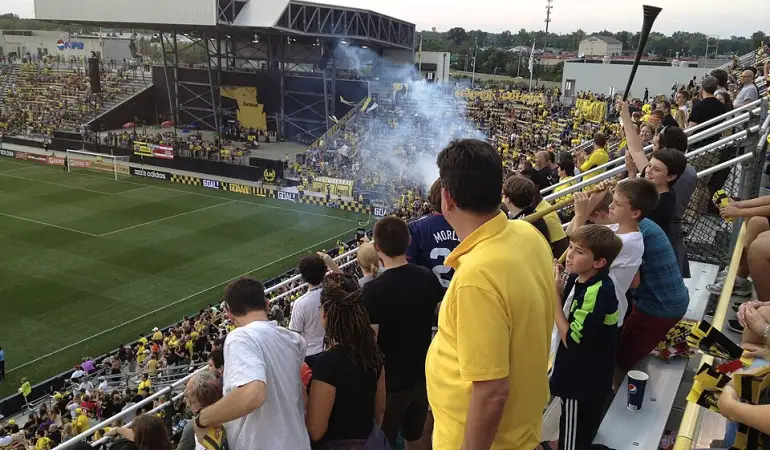
The owners who stayed, led by Anschutz and Lamar Hunt, kept building soccer-specific stadiums. Six more opened between 2003 and 2008, and by the end of 2008 most MLS teams played in one. Expansion returned in 2005 with Real Salt Lake and Chivas USA, a sister club of Mexico's Guadalajara that shared the Galaxy's stadium. In 2006 the San Jose Earthquakes' owners, players and coaches moved to Texas and became the Houston Dynamo after failing to get a stadium built in San Jose. A new San Jose team rejoined the league in 2008.
Beckham and the Expansion Boom: 2007 to 2019
The 2007 season changed the league's direction. Toronto FC became the first Canadian club and sold out its games, and David Beckham joined the LA Galaxy as the first signing under the new Designated Player rule, which let clubs pay a few stars well above the salary cap. Later designated players included Thierry Henry, Robbie Keane, Kaká, David Villa, Andrea Pirlo, Frank Lampard and Steven Gerrard.
Expansion came almost every year after that. Seattle Sounders FC opened in 2009 in front of 32,523 fans. Chivas USA was the one failure of the era: the league bought the club in 2014 and shut it down that October, and Los Angeles FC took its place as the city's second team in 2018.
The biggest fight of the period was in Columbus. In 2017 owner Anthony Precourt announced plans to move the Crew, a founding club, to Austin. Fans ran a "Save the Crew" campaign and the state of Ohio took legal action. The deal that ended it saw Cleveland Browns owner Jimmy Haslam's group buy the Crew and keep it in Columbus, while Precourt got a new expansion team, Austin FC, which started play in 2021.
| Season | Change | Teams |
|---|---|---|
| 1996 | League launches | 10 |
| 1998 | Chicago Fire and Miami Fusion join | 12 |
| 2002 | Tampa Bay Mutiny and Miami Fusion contracted | 10 |
| 2005 | Real Salt Lake and Chivas USA join | 12 |
| 2007 | Toronto FC joins | 13 |
| 2008 | San Jose Earthquakes return | 14 |
| 2009 | Seattle Sounders FC joins | 15 |
| 2010 | Philadelphia Union joins | 16 |
| 2011 | Portland Timbers and Vancouver Whitecaps join | 18 |
| 2012 | Montreal Impact joins | 19 |
| 2015 | New York City FC and Orlando City join; Chivas USA folded after 2014 | 20 |
| 2017 | Atlanta United and Minnesota United join | 22 |
| 2018 | Los Angeles FC joins | 23 |
| 2019 | FC Cincinnati joins | 24 |
| 2020 | Nashville SC and Inter Miami join | 26 |
| 2021 | Austin FC joins | 27 |
| 2022 | Charlotte FC joins | 28 |
| 2023 | St. Louis City SC joins | 29 |
| 2025 | San Diego FC joins | 30 |
Expansion fees tell the same story. New York City FC paid a then-record $100 million to join in 2015. FC Cincinnati and Nashville each paid $150 million, Charlotte about $325 million, and San Diego FC a record $500 million.
MLS Today: Messi, Apple and 30 Teams
The 2020s brought the league its biggest star and its biggest TV deal. In 2022 MLS signed a 10-year, $2.5 billion agreement that made Apple TV the home of every MLS match from 2023. That summer Lionel Messi joined Inter Miami, the club David Beckham co-owns. The 2024 season set attendance records, averaging 23,240 fans per match, and the league credited Messi for part of the jump.
The trophies have followed. The LA Galaxy won a record sixth MLS Cup in 2024, and in December 2025 Inter Miami won their first, beating the Vancouver Whitecaps 3-1 with two assists from Messi. With 30 clubs, MLS is now the largest top-flight soccer league in the world by number of teams, with the third-highest average attendance of any U.S. pro league behind the NFL and MLB.
What Comes Next: A New Calendar
In November 2025 MLS announced its biggest structural change since 1996. After the 2026 season, the last to run spring to fall, the league plays a shortened 14-match season in early 2027. The 2027-28 season then starts in July, breaks from mid-December to February, and finishes with the MLS Cup playoffs in May, much closer to the European calendar. The two conferences will also give way to a single table split into five regional divisions.
The league that shrank to 10 teams in 2002 now has 30, its own stadiums, a global TV partner and a calendar that lines up with Europe's transfer market. It's a long way from shootouts and a countdown clock.
Frequently Asked Questions
- When did MLS start?
- Major League Soccer was formed in February 1995 and played its first season in 1996 with 10 teams. The first match was on April 6, 1996, when the San Jose Clash beat D.C. United 1-0 in front of 31,000 fans at Spartan Stadium.
- Why did MLS contract two teams?
- MLS lost an estimated $250 million in its first five years. In January 2002 the league folded its two Florida clubs, the Tampa Bay Mutiny and the Miami Fusion, cutting the league from 12 teams back to 10. The league had run the Mutiny itself for its whole existence and could never find a local owner to take it over.
- What were the original 10 MLS teams?
- The original 10 were the Columbus Crew, D.C. United, New England Revolution, NY/NJ MetroStars, Tampa Bay Mutiny, Colorado Rapids, Dallas Burn, Kansas City Wiz, Los Angeles Galaxy and San Jose Clash.
- Which team has won the most MLS Cups?
- The LA Galaxy have won the most MLS Cups, with six titles. Their sixth came in 2024. D.C. United, the league's first dynasty, won three of the first four MLS Cups.
- How many teams are in MLS now?
- MLS has 30 teams. San Diego FC became the 30th when it joined in 2025, after paying a record $500 million expansion fee.